
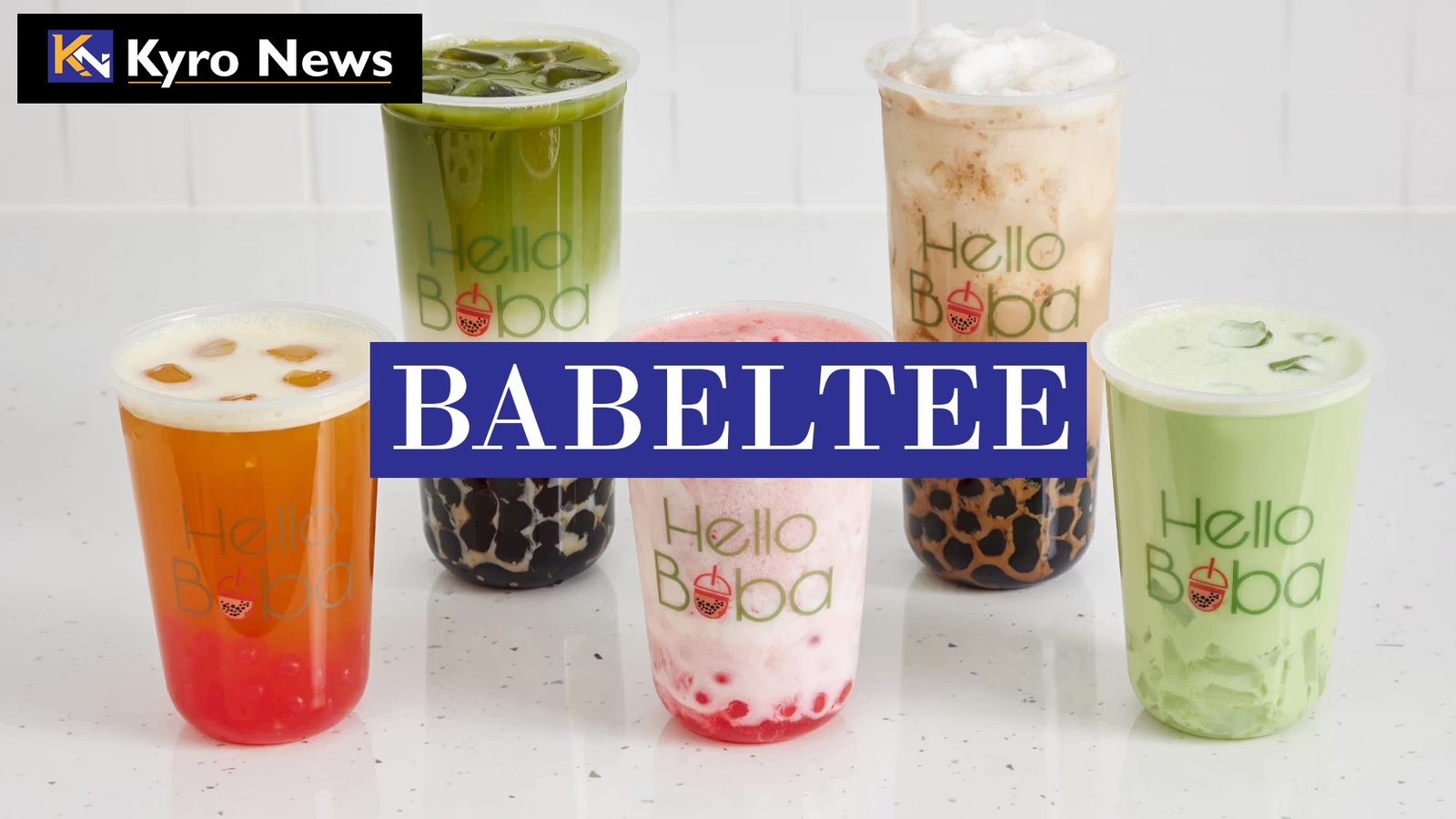
Search “Babeltee” and you’ll find genuinely contradictory answers: one article directly asks “Is It a Drink, an App, or Something More?” without settling on a clear answer, another calls it “modern tea drinks and bubble tea culture,” while yet another promises “ingredients, tea bases, health benefits, and how to make it” as if it were a specific, established recipe. This article walks through the inconsistent claims made about Babeltee, why they don’t converge on a single, checkable definition, and how to recognize this pattern the next time an unfamiliar food or lifestyle term shows up across contradictory explainer content.
If you’re trying to figure out whether Babeltee is a specific drink you can order, an app you can download, or a broader cultural trend, the honest answer is that none of the existing coverage settles that basic question with any real evidence, and that unresolved contradiction is itself the most important thing to understand about the term.


The Genuinely Contradictory Claims About Babeltee
What sets Babeltee apart from many other unclear search terms is that its own coverage explicitly acknowledges the ambiguity rather than papering over it: one article’s headline poses the question directly, “Is It a Drink, an App, or Something More?”, without committing to an answer in the way a genuine explainer describing a real, specific thing normally would. Other articles proceed as though the answer were obviously “a drink,” offering detailed-sounding content about “ingredients, tea bases, health benefits, and how to make it,” language that implies a specific, documented recipe or product. Still others frame it more broadly as “bubble tea culture” in general, a much vaguer claim about a cultural phenomenon rather than a specific drink, app, or product with defined characteristics.
Why a Headline Admitting Uncertainty Is Worth Taking Seriously
It’s worth pausing specifically on the article that frames its own coverage as an open question, “is it a drink, an app, or something more?”, since this kind of hedged framing is genuinely unusual for content covering an established, real product or trend. Legitimate food and beverage journalism, or genuine app coverage, describes what a real thing actually is, based on tasting it, using it, or referencing specific, verifiable documentation, rather than posing the most basic identifying question as unresolved. An article that can’t settle whether its own subject is a beverage or a piece of software is a strong signal that the underlying term doesn’t have a specific, real referent that any of the coverage has actually verified.
Why the “Recipe” Content Doesn’t Hold Up Either
Even setting aside the drink-versus-app confusion, the specific “recipe” content describing Babeltee’s ingredients, tea bases, and preparation method deserves scrutiny on its own terms. A genuine, named specialty drink, particularly one framed as connected to bubble tea culture, would typically be traceable to a specific origin: a particular tea shop or chain that created or popularized it, a specific city or region associated with its emergence, or at minimum, consistent agreement across independent sources about its actual defining ingredients. The “recipe” content available for Babeltee doesn’t reference any of this kind of specific, checkable origin, reading instead like a generic tea-drink recipe template applied to an unfamiliar name, a pattern that shows up regularly across fabricated food and beverage terms more broadly.
How Genuine Bubble Tea Trends and Variations Actually Get Documented
It’s useful to compare Babeltee’s inconsistent coverage against how genuinely new bubble tea variations and trends actually get documented and spread. Bubble tea, or boba, is a genuinely well-documented beverage category with a specific, traceable origin in Taiwan, and its many real regional and shop-specific variations are typically covered by food journalism referencing specific tea shops, named creators, and the particular cities or bubble tea scenes where a variation first became popular, connecting to the broader, well-documented history and evolution of bubble tea as a beverage category. Genuinely trending drink variations also tend to generate organic social media documentation, people posting photos and reviews of a specific drink at a specific shop, which provides an independent, checkable trail entirely separate from any single explainer article’s claims. None of that trail exists for Babeltee.
Why the Name Itself Suggests a Wordplay Origin Rather Than a Real Product
It’s worth considering Babeltee’s name directly, since “Babel” evokes the Tower of Babel and its association with confused, mixed languages or communication, while “tee” is the German word for tea and also phonetically echoes “tea” in English. This kind of clever, bilingual wordplay name is exactly the sort of thing that content producers invent specifically because it sounds catchy and generates curiosity, rather than describing an actual product that emerged organically from a specific tea shop, culture, or community. A name built primarily around wordplay, without any of the specific sourcing a genuine drink or product would have, fits a recognizable pattern seen across other invented food, beverage, and product terms designed to capture search interest.
Why Food and Drink Terms Are a Common Target for This Pattern
Food and beverage topics are a particularly attractive category for vague, keyword-driven content, since readers have broad, low-barrier curiosity about new drinks and food trends, and a headline promising to reveal “why everyone is talking about” a new drink term feels immediately relevant regardless of whether an actual, specific product exists behind it. This same basic pattern, an invented or unclear term paired with generic “trending” and “everyone is talking about” language, recurs across food, beverage, and lifestyle search terms more broadly, and recognizing it here makes it considerably easier to spot the same structure elsewhere.
Why This Pattern Extends Beyond Food and Drink Terms
The core problem with Babeltee’s coverage, generic, appealing language applied to a name with no specific, checkable referent, is the same underlying issue documented across many other unverified search terms spanning technology, retail, and cultural claims, not something unique to food and beverage content specifically. Consumer awareness resources covering how to spot misleading or fabricated online content generally recommend the same core checks regardless of the specific category involved: looking for a named, specific, verifiable source behind any claim, checking whether independent coverage actually agrees on basic facts, and treating a term’s popularity in search results as separate from evidence that it describes something real. Babeltee is a useful illustration of this broader principle specifically because its own coverage’s internal contradiction makes the underlying pattern unusually easy to spot.
How to Evaluate an Unfamiliar Food or Drink Trend Term
If you come across a term like Babeltee promising to explain a new drink or trend, a few checks help determine whether anything real backs it up. Search specifically for a named tea shop, chain, or specific city where the drink supposedly originated, the kind of detail genuine food trend coverage consistently includes. Look for organic social media posts, photos, and reviews from people describing an actual, specific experience trying the drink, rather than relying solely on explainer articles. And treat a term whose own coverage can’t agree on the most basic question, whether it’s a food product, an app, or a broader cultural concept, as a strong signal that nothing specific and real currently sits behind the name.
Why Multiple Articles Covering the Same Contradictions Isn’t Independent Confirmation
It’s worth being clear about a reasoning trap that’s easy to fall into with a term like Babeltee: seeing it covered across several different websites can feel like evidence that it’s a genuinely significant trend, when the actual content of that coverage contradicts itself on the most basic identifying question. Genuine independent food journalism covering a real drink trend tends to converge on the same basic facts even when individual articles differ in style or depth, what the drink actually is, where it originated, what it costs. When multiple articles instead can’t agree on whether their shared subject is even a beverage or a piece of software, that’s a sign of a shared, low-substance content pattern being applied to a trending-sounding term, not a sign of a well-documented, real product generating diverse independent coverage.
What to Do if You Encounter Babeltee Marketed as a Real Product
If you come across a specific product, drink, or app actually being sold or marketed under the name Babeltee, it’s worth applying more scrutiny than the name recognition alone might suggest, precisely because the existing explainer content provides no verified baseline to check a specific claim against. Look for the same basic verification markers relevant to any new food or beverage product or app: a specific, named business behind it, a physical location or verifiable online storefront, and independent customer reviews on platforms not affiliated with the seller. The absence of any of these markers in a specific real-world offering using this name would be a reasonable basis for caution before purchasing or providing payment information.
Conclusion
Babeltee’s coverage doesn’t agree on the most basic question of what it actually is, with one source explicitly framing it as an open question between a drink and an app, while others proceed confidently with recipe-style content or vaguer “bubble tea culture” framing, none of it grounded in a specific, checkable origin, tea shop, or documented product. This kind of fundamental disagreement, especially one openly acknowledged in the coverage itself, is a clear signal that nothing verifiable currently backs up any specific version of the claims being made.
Anyone encountering Babeltee is better served treating the existing content as unverified rather than assuming any of its competing framings reflects a real, specific drink, app, or trend, and looking instead for the kind of specific, sourced detail, a named shop, a documented origin, organic user photos and reviews, that genuine food and beverage trends consistently generate.
Frequently Asked Questions
What is Babeltee?
There’s no verifiable, consistent definition currently available. It’s been described inconsistently as a drink, an app, and a broader “bubble tea culture” trend, without any version providing checkable specifics.
Is Babeltee a real bubble tea drink I can order?
No specific tea shop, chain, or documented origin has been identified to confirm it’s an actual, orderable drink.
Is Babeltee an app?
No verifiable app store listing or developer has been identified, despite at least one source raising this as a possibility.
Why can’t sources agree on what Babeltee actually is?
This kind of unresolved disagreement, especially when a source’s own headline poses it as an open question, is a strong sign the term lacks a real, specific, verified referent.
Where does the name Babeltee come from?
It appears to combine “Babel,” evoking confused or mixed communication, with “tee,” the German word for tea, suggesting a wordplay-driven invented name rather than an organically emerged product.
Should I trust the “recipe” articles describing Babeltee’s ingredients?
Not without independent verification, since these articles don’t reference a specific, traceable origin or shop the way genuine drink-recipe coverage typically does.
How can I verify whether a new bubble tea trend is real?
Look for a named tea shop or city of origin, and organic social media photos and reviews from people describing an actual, specific experience with the drink.