

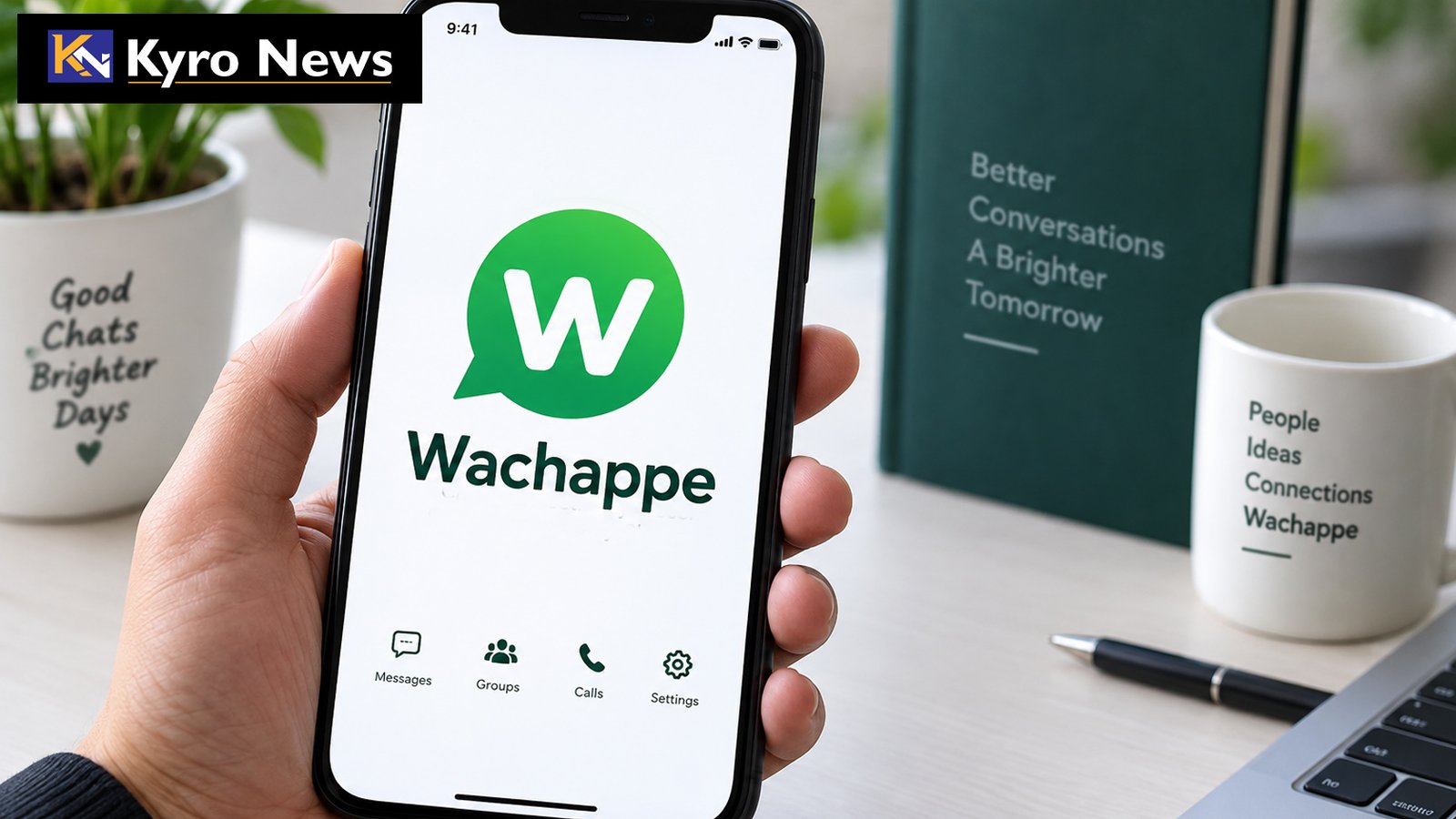
Search “Wachappe” and you’ll find it called “the ultimate messaging app” on one site, “a secure AI-powered messaging app with multi-device sync and business tools” on another, and, more tellingly, a term whose own coverage on a major explainer site is titled “History, Possible Features, Safety Concerns, and Alternatives,” language that hedges on whether it even has confirmed features at all. This article walks through the conflicting claims made about Wachappe, why the name itself follows a recognizable pattern, and why none of the coverage currently available adds up to a real, verifiable app.
If you’re trying to figure out whether Wachappe is something worth downloading or trusting with your messages, the honest answer is that nothing currently verifies it as a real, functioning product, and understanding why matters more than picking whichever description sounds most polished.


The Inconsistent Claims Made About Wachappe
Wachappe’s coverage doesn’t agree on basic facts. Some articles describe it in sweeping, confident terms as “the ultimate messaging app” or a “secure AI-powered messaging app with multi-device sync and business tools,” language that implies a mature, feature-complete product comparable to established messaging platforms. Other articles are noticeably more tentative, one explicitly frames its coverage around “possible features” rather than confirmed ones, and pairs that hedge with “safety concerns and alternatives,” an odd combination for a genuinely established, trustworthy app to require in its own explainer coverage. A third framing describes it simply as “the modern communication platform,” without specifying whether that means a messaging app, a broader collaboration tool, or something else entirely.
These aren’t minor differences in emphasis. A genuinely real messaging app would have one consistent, verifiable feature set, not multiple competing descriptions ranging from confidently comprehensive to explicitly uncertain about its own existence.
Why the Name Itself Follows a Recognizable Pattern
Wachappe’s name is worth examining on its own terms, since it closely echoes “WhatsApp,” one of the most widely used messaging platforms in the world. This is a recognizable pattern seen across a range of unverified or unauthorized apps and platforms: choosing a name phonetically or visually similar to an established, trusted product, which can make an unfamiliar or unverified app seem more legitimate at a glance and can also capture search traffic from users who misremember or mistype the name of the service they actually intended to find. Recognizing this naming strategy is itself a useful signal, a product name that closely mimics a major established platform without any confirmed affiliation warrants more scrutiny, not less, before trusting it with personal messages or contacts.
Why “AI-Powered” and “Multi-Device Sync” Claims Need Real Evidence
The claim that Wachappe is a “secure AI-powered messaging app with multi-device sync and business tools” is worth examining specifically, since messaging apps making claims like this normally have a substantial, verifiable footprint to back them up: an official app store listing with a developer name, a privacy policy detailing how messages and data are handled, security documentation or independent audits confirming genuine end-to-end encryption, and a company or developer identifiable through business registration or a professional history in software development. None of that verifiable infrastructure has been identified for Wachappe. A messaging app, of all software categories, carries genuinely serious privacy and security stakes, since it’s specifically designed to handle private communications and personal contact information, which makes the complete absence of verifiable security documentation a more serious concern here than it might be for a lower-stakes product category.
What Legitimate Messaging Apps Actually Document
It’s useful to compare Wachappe’s coverage against what an established, trustworthy messaging platform typically provides. Legitimate messaging apps publish detailed information about their encryption and security practices, often subject to independent security audits, alongside clear developer identification, official app store presence with verifiable install numbers and user reviews, and a specific, traceable company or development team standing behind the product. This kind of documentation exists precisely because messaging apps are handling sensitive personal communication, and legitimate developers have strong incentives to demonstrate trustworthiness through transparency rather than relying on vague, confident marketing language alone.
None of that trail currently exists for Wachappe in any of its competing descriptions, no verified developer, no official app store listing that can be independently confirmed, and no published security documentation matching the specific “AI-powered” and “multi-device sync” claims being made about it.
Why “Possible Features” Language Is a Particularly Telling Detail
One specific detail worth dwelling on is an article explicitly framing its own coverage around Wachappe’s “possible features” rather than confirmed ones, paired directly with “safety concerns” in the same title. This kind of hedged language is genuinely unusual for coverage of an established product, legitimate technology journalism generally describes what a real, released app actually does, based on hands-on testing or official documentation, rather than speculating about what features it might have. An article structured this way reads less like reporting on a verified product and more like an attempt to generate plausible-sounding content around a term without the underlying certainty that genuine product coverage requires.
Why Fabricated App Claims Follow This Same Template Repeatedly
Wachappe fits a broader, recognizable pattern seen across other unverified messaging and productivity app claims: confident, feature-rich descriptions, AI-powered, secure, multi-device, business tools, applied to a name with no traceable developer, no verifiable app store presence, and no independent user discussion describing actual hands-on use. This vocabulary is attractive to content producers because it sounds current and relevant without requiring any specific, falsifiable claim, “secure AI-powered messaging” could describe virtually any messaging app, real or invented, without committing to any detail an independent reviewer could actually check.
Why Business-Tool Claims Add Another Layer Worth Questioning
Beyond the basic messaging and AI claims, at least one description of Wachappe adds “business tools” to its feature list, positioning it as something enterprises or small businesses might adopt for professional communication. This kind of claim raises the evidentiary bar even further, since legitimate business communication software typically involves published pricing tiers, documented integrations with other business systems, customer case studies naming actual companies that use the product, and a support infrastructure geared toward professional clients. None of that exists for Wachappe. A genuine business messaging platform, even a small or early-stage one, would normally be discoverable through business software review platforms that aggregate verified user reviews of workplace software, where real customers describe specific, checkable experiences with pricing, support, and functionality. The absence of Wachappe from this kind of independent review ecosystem, despite the confidence of the “business tools” claim, is consistent with the broader pattern of unverifiable marketing language applied to a product with no traceable operational history.
Why Multiple Unrelated Publications Covering the Same Unverified Claims Isn’t Independent Confirmation
It’s worth being clear about a reasoning trap that’s easy to fall into here: seeing Wachappe described across several different websites can feel like independent confirmation that it’s a real, significant product, when in fact it more likely reflects the same underlying content pattern being applied by multiple, unrelated content producers chasing the same search interest. Genuine independent journalism about a real app tends to diverge in specific, meaningful ways between publications, different reviewers testing different features, different critical takes, different specific details drawn from actual hands-on use. When several articles instead converge on similar generic vocabulary, “ultimate,” “secure,” “AI-powered,” “modern,” without any of them offering a distinct, specific, personally-verified detail, that convergence is a sign of a shared content template rather than a sign of a well-documented, real product.
How to Verify Whether a Messaging App Is Actually Safe to Use
If you’re evaluating whether to try an unfamiliar messaging app like Wachappe, a few checks matter more than confident marketing language. Look for the app on official, established app stores, and check whether the listed developer has a verifiable history and other identifiable products. Search specifically for independent security reviews or audits, not just the app’s own marketing claims about encryption and privacy. And be genuinely cautious about granting an unverified app access to your contacts, messages, or personal information, since messaging apps by nature request exactly the kind of permissions that a poorly vetted or malicious app could misuse.
Conclusion
Wachappe’s coverage is inconsistent at a basic level, ranging from confident claims of being “the ultimate messaging app” to explicit hedging around “possible features,” without any of the verifiable developer identity, security documentation, or official app store presence that a genuinely established messaging platform would have. Its name’s close resemblance to WhatsApp fits a recognizable pattern of unverified apps borrowing credibility from established, trusted brands.
Anyone considering Wachappe is better served verifying a specific developer, official app store listing, and independent security review before trusting it with personal messages or contacts, rather than relying on the confident but unsupported claims currently circulating about it.
What to Do if You’ve Already Installed Wachappe
If you’ve already downloaded or installed an app called Wachappe, a few practical precautions are worth taking regardless of where you found it. Review what permissions the app has been granted, particularly access to contacts, messages, camera, or microphone, and revoke anything that seems excessive for a basic messaging function. Consider whether any personal information or contact lists may have already been shared with the app and adjust your security posture accordingly, including watching for unusual activity across other accounts that share a password or recovery information. And when in doubt, established, well-documented messaging platforms with verifiable developers and independent security track records remain the safer default for handling genuinely private communication.
Frequently Asked Questions
What is Wachappe?
There’s no verifiable, consistent definition currently available. It’s been described inconsistently as “the ultimate messaging app,” an AI-powered platform with multi-device sync, and a product with only “possible features,” without any version providing checkable specifics.
Is Wachappe a real, safe messaging app?
No verifiable developer, official app store listing, or independent security documentation has been identified to confirm it’s a genuine, safe product.
Why does Wachappe’s name sound like WhatsApp?
This appears to follow a recognizable pattern of unverified apps choosing names that closely echo an established, trusted platform to seem more legitimate and capture misdirected search traffic.
Should I trust claims that Wachappe is “AI-powered” and secure?
Not without independent verification, since no published security documentation, audit, or developer identity currently supports these specific claims.
Why do some articles hedge with “possible features” instead of confirming what Wachappe does?
That kind of hedged language is unusual for coverage of a genuinely established product and suggests the content may be built around a search term rather than verified, hands-on product knowledge.
What should I check before trying an unfamiliar messaging app?
Look for an official app store listing, a verifiable developer with a real history, and independent security reviews or audits before granting access to your contacts and messages.
Are there safer alternatives to an unverified app like Wachappe?
Yes, established messaging platforms with verifiable developers, published security documentation, and independent audits are a considerably safer choice for private communication.