

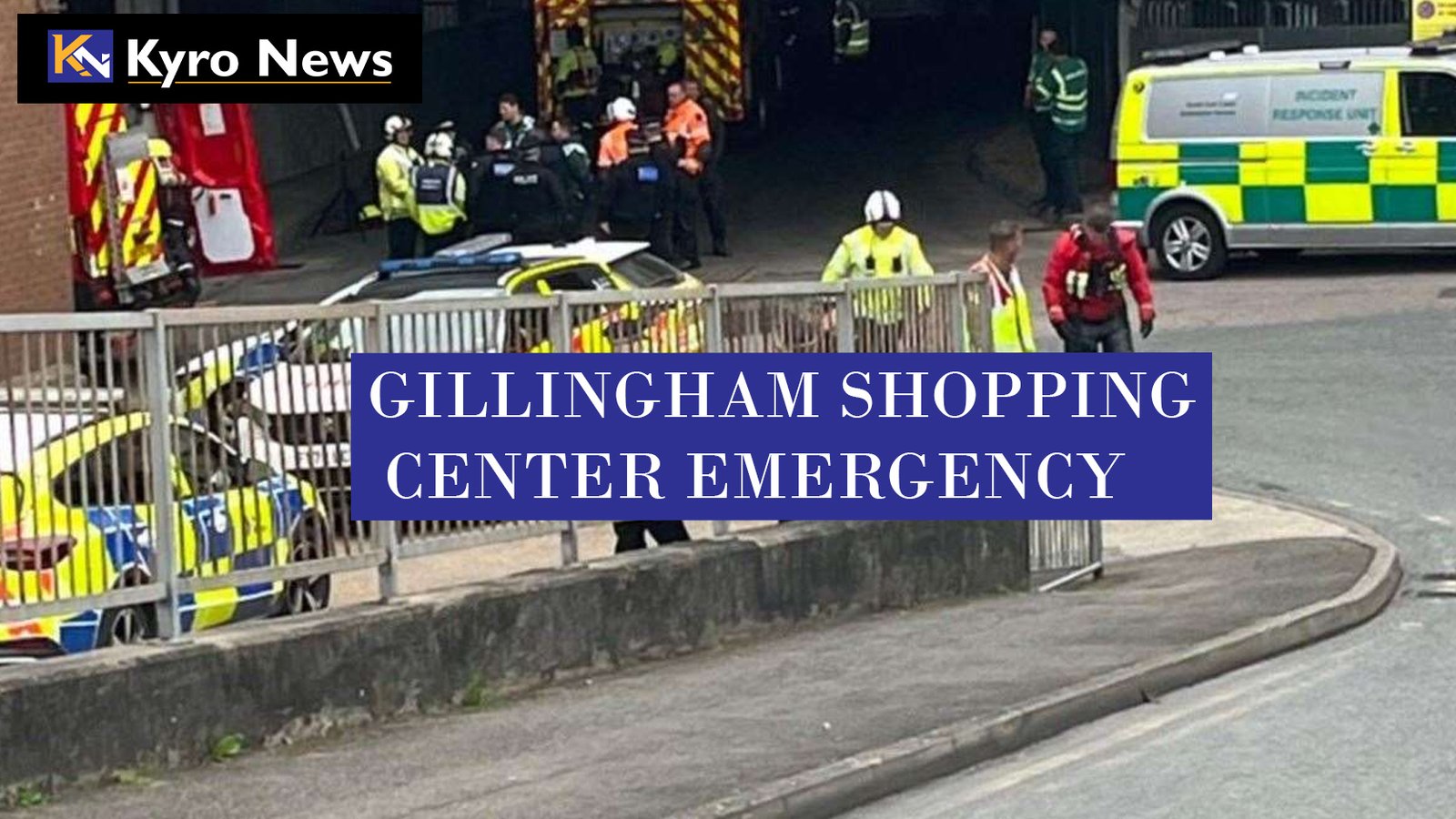
On the morning of August 17, 2025, emergency services were called to Hempstead Valley Shopping Centre in Gillingham, Kent, near the M&S car park, in response to a report of a person requiring urgent medical attention. Ambulance crews, police, and fire service personnel responded to the scene shortly after 10am. Despite the response, one person died at the scene. This article covers what’s actually been confirmed about the incident through local news reporting, and separates that from the vaguer, less reliable content that has since been built around the search term “Gillingham Shopping Center Emergency.”
Because this involves a real person’s death, this guide sticks closely to what’s been confirmed through direct local news reporting, and avoids the kind of speculative framing found in some of the more generic content that has since attached itself to this search term.


What’s Actually Been Confirmed
According to Kent Online, a regional news outlet covering Kent and the Medway area, emergency services responded to Hempstead Valley Shopping Centre in Gillingham on the morning of August 17, 2025, following a report of a person needing medical attention near the shopping centre’s M&S car park. Multiple emergency vehicles, including at least two ambulances and two police cars, were present at the scene. An ambulance service spokesperson confirmed that crews attended but that the person died at the scene. This is the extent of what’s been publicly confirmed through direct, on-the-ground local news reporting.
What Hasn’t Been Confirmed
It’s worth being clear about what genuine local reporting has not confirmed, specifically the identity of the person involved, the precise cause of death, or further details about the circumstances leading up to the emergency call. Responsible local journalism generally withholds this kind of detail, particularly regarding cause of death, unless and until it’s confirmed by the coroner’s office or next of kin have been notified and consulted, reflecting standard, respectful UK journalistic practice around reporting on sudden deaths. Any content claiming to offer additional specifics beyond what’s outlined above should be treated with real skepticism unless it cites a specific, credible update from local police, the coroner’s office, or established local news coverage.
About Hempstead Valley Shopping Centre and Gillingham
Hempstead Valley Shopping Centre is a genuine, well-established retail center serving Gillingham and the wider Medway area in Kent, England, home to a range of retailers including a Marks & Spencer store, near whose car park this particular incident occurred. As an established, regularly used community shopping destination, the centre has also been the subject of other, entirely separate local news coverage over time, including previous reporting on temporary business closures for emergency repairs and at least one other unrelated incident involving a supermarket closure for a medical emergency, underscoring that this is a real, actively operating public space woven into the everyday life of the local community, not simply a search term.
Why Distinguishing Genuine Local News From Generic Content Matters Here
This particular search term is a useful example of why it matters to distinguish genuine, sourced local journalism from the more generic explainer content that tends to accumulate around any search term that generates public interest, including sensitive news events. Established regional outlets like Kent Online operate under standard journalistic sourcing and verification practices, reporting specific, attributed facts, an ambulance service spokesperson’s statement, a specific time and location, verified through direct contact with the relevant emergency services. Generic content built afterward around the same search term, by contrast, sometimes uses vaguer, more sensationalized framing, promising “real risks exposed” or a full “incident breakdown,” without necessarily being grounded in any additional verified reporting beyond what the original local news coverage established.
How to Follow Genuine Updates on Local Incidents Like This
For anyone specifically looking for reliable, ongoing information about this or a similar local incident, established regional news outlets covering the specific area, in this case Kent Online’s coverage of the Medway region, remain the most reliable source for verified updates, since local reporters maintain direct relationships with area police, ambulance, and fire services and are typically the first to receive and verify official statements. Official channels from Kent Police or the South East Coast Ambulance Service would also be the appropriate source for any further official confirmation, rather than generic explainer sites that may simply be republishing or elaborating on the original local reporting without any independent verification of their own.
Why Sensitive News Events Attract This Kind of Generic Content
It’s worth understanding, in general terms, why an event like this one tends to generate a wave of generic explainer content beyond the original local reporting. Search interest spikes noticeably around any newsworthy local event, and this spike in search traffic creates an incentive for general content sites to quickly produce their own articles using the same search terms, even without any independent reporting or additional verified information to add. This is a recognizable pattern across many local news events, not unique to this particular incident, and it’s a useful general reason to prioritize the original, directly sourced local reporting over secondary content that may simply be repackaging the same limited facts with more dramatic framing.
A Note on Respectful Coverage of Sudden Deaths
It’s worth acknowledging directly that this incident involved the death of a real person, and that respectful, accurate coverage matters more here than search optimization or dramatic framing. Responsible reporting on sudden public deaths generally avoids speculation about cause, avoids identifying the individual without confirmed, appropriate authorization, and focuses on the confirmed, relevant facts, which is the approach this article has aimed to follow, consistent with the original local news reporting it draws from.
How UK Sudden Deaths Are Typically Investigated
For general context, sudden or unexplained deaths in the UK are typically referred to the local coroner’s office, whose role is to establish the cause of death through investigation and, where necessary, a formal inquest. This is a standard, routine legal process for any sudden death that isn’t immediately attributable to a known, ongoing medical condition, and it doesn’t necessarily indicate suspicious circumstances, coroners review a wide range of sudden deaths as a matter of standard legal process. Any further public details about this specific incident, including a confirmed cause of death, would most likely emerge through this established coroner’s inquest process rather than through informal online speculation, and would typically be reported by the same local news outlets that covered the initial incident.
Why Public Emergency Responses at Retail Locations Are Handled the Way They Are
It’s worth understanding, in general terms, why a multi-service emergency response, ambulance, police, and fire, might attend a medical emergency at a public retail location even when the eventual outcome doesn’t involve any ongoing safety threat to the wider public. Standard emergency protocols in the UK typically involve dispatching the services judged potentially necessary based on the initial nature of a call, which can include multiple service types attending in tandem simply as standard precautionary practice, rather than indicating a broader danger to the shopping centre or its other visitors. This is a routine and appropriate response protocol, not an indication of a wider public safety issue.
Why This Guide Doesn’t Speculate Further
Readers looking for additional detail beyond what’s outlined in this article, specific circumstances, a name, an official cause of death, won’t find it here, and that’s intentional rather than an oversight. Responsible coverage of a sudden death draws a firm line between reporting confirmed, attributed facts and speculating to fill gaps that haven’t yet been officially addressed, and that line matters considerably more than satisfying curiosity about details that families and officials haven’t chosen, or haven’t yet been able, to make public. If and when further confirmed details become available through established local news channels, this kind of update would typically appear through the same regional outlets that covered the initial incident, rather than through generic search-optimized content produced independently of any new reporting.
Conclusion
On August 17, 2025, emergency services responded to a report of a person requiring medical attention at Hempstead Valley Shopping Centre in Gillingham, Kent, and the person died at the scene despite the response from ambulance, police, and fire services. This is the extent of what’s been confirmed through direct, credible local news reporting from Kent Online, and further specific details about the individual or the precise circumstances have not been publicly confirmed.
Anyone looking for accurate, ongoing information about this or a similar local incident is best served relying on established regional news outlets with direct reporting relationships to local emergency services, rather than generic explainer content that may simply repackage limited existing facts with more dramatic or speculative framing.
A Broader Note on Searching for News About Local Incidents
For anyone who regularly searches for news about local incidents in their own area, this particular case is a reasonably representative example of a broader pattern worth keeping in mind: the original, directly sourced reporting from a credible local outlet is typically published quickly after an incident and tends to be fairly limited in detail, appropriately so, while a wider array of secondary content, some accurate, some considerably less so, tends to accumulate over the following days and weeks. Prioritizing the earliest, most directly sourced coverage, and treating anything published significantly later without a clear new source as secondary and less reliable by default, is a reasonable general practice for following any local news story responsibly.
Frequently Asked Questions
What happened at Hempstead Valley Shopping Centre in Gillingham?
On August 17, 2025, emergency services responded to a report of a person requiring medical attention near the M&S car park, and the person died at the scene.
When did this incident occur?
Emergency services were called shortly after 10am on August 17, 2025.
Has the identity of the person been released?
No, this detail has not been publicly confirmed through established local news reporting, consistent with standard practice around sudden death reporting.
What was the cause of death?
This has not been publicly confirmed. Responsible reporting generally withholds this kind of detail unless confirmed by the coroner’s office.
Was the shopping centre evacuated?
No specific evacuation has been confirmed through established local news reporting; the response involved ambulance, police, and fire services attending the scene.
Is Hempstead Valley Shopping Centre still open?
The shopping centre is a genuine, ongoing retail destination serving the Gillingham and Medway area; specific current operating status should be checked through the centre’s own official channels.
Where can I find reliable updates on this incident?
Established regional news outlets covering Kent and Medway, such as Kent Online, along with official Kent Police and ambulance service channels, are the most reliable sources for verified information.