

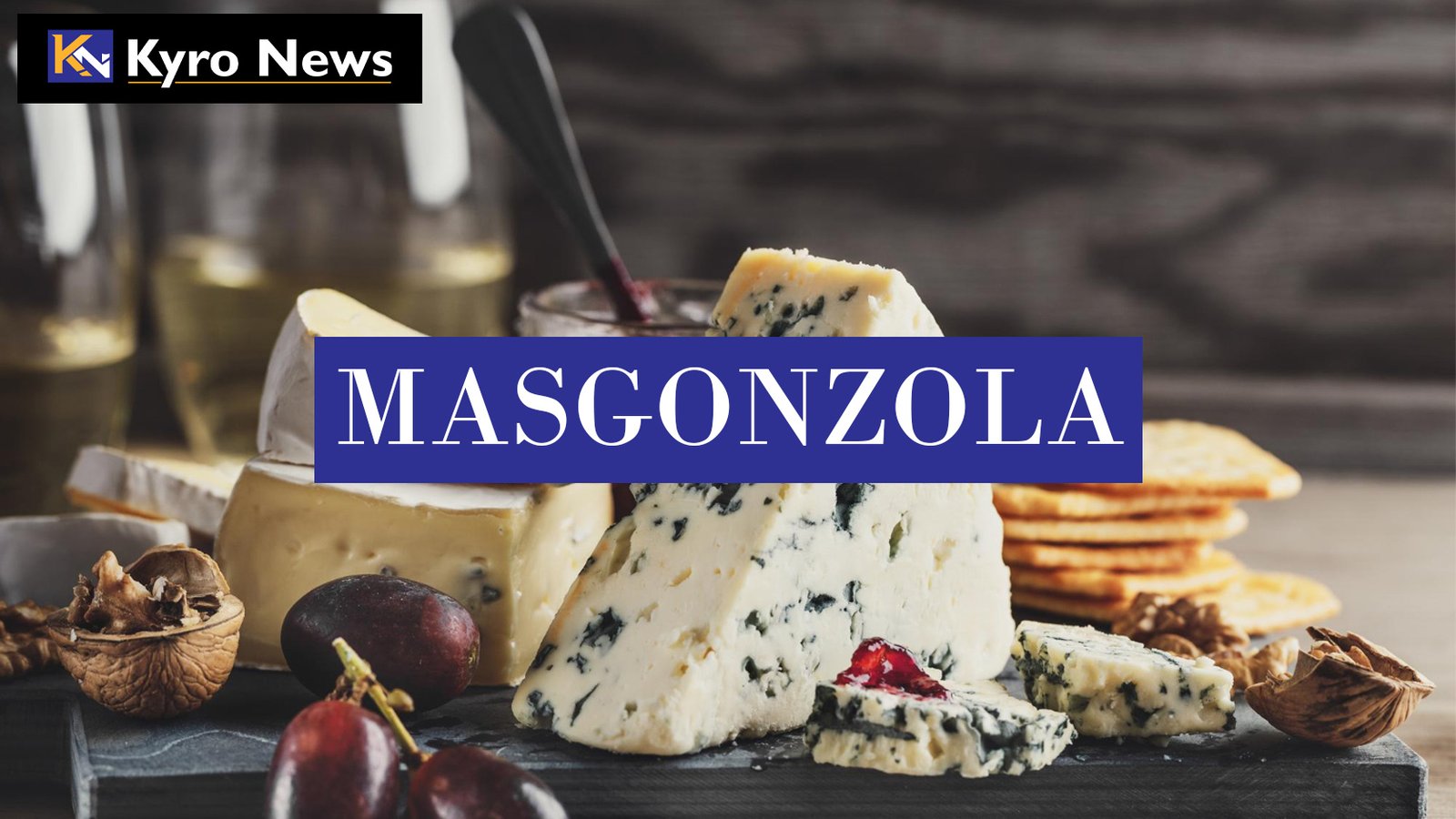
Masgonzola isn’t a protected cheese name you’ll find regulated the way Gorgonzola or Parmigiano-Reggiano are. It’s an informal term for a genuinely appealing combination: mascarpone blended with Gorgonzola Dolce, mellowing the sharp, tangy bite of blue cheese into something creamier and more approachable. This article covers what Masgonzola actually is, how the combination works, and where it fits alongside similar, more formally recognized cheese products.
Because “Masgonzola” itself is a descriptive, informal label rather than an officially regulated name, this guide separates the genuine culinary concept behind it from any specific branding, while grounding the underlying cheese science in well-established facts.


What Is Masgonzola?
Masgonzola describes a cheese blend combining two distinct Italian cheeses: mascarpone, a rich, soft, mild triple-cream cheese, and Gorgonzola Dolce, the sweeter, milder variety of Gorgonzola blue cheese, as opposed to the sharper, more aged Gorgonzola Piccante. The name itself is a straightforward portmanteau, combining the first part of “mascarpone” with the back half of “Gorgonzola,” a common naming pattern for blended or hybrid food products.
The resulting mixture takes on the texture and creaminess of mascarpone while retaining enough of the Gorgonzola’s characteristic blue veining and tang to read clearly as a blue cheese product, just a gentler, more balanced version than Gorgonzola on its own.
Why the Combination Works
Mascarpone and Gorgonzola Dolce complement each other for specific, understandable reasons rooted in how each cheese behaves on its own. Mascarpone brings a high fat content and a naturally sweet, mild flavor with essentially no sharpness, functioning almost like a flavor buffer. Gorgonzola Dolce, meanwhile, is already the gentler of the two main Gorgonzola styles, softer and creamier than Gorgonzola Piccante, with a tang that’s present but not overwhelming even before blending.
Combining the two lets the blue cheese character come through without the intensity that can make straight Gorgonzola difficult for some palates, while the mascarpone adds a smoothness that makes the blend spreadable in a way pure Gorgonzola often isn’t. The result works particularly well for people who like the idea of blue cheese but find fully aged, sharper varieties too intense on their own.
Masgonzola Isn’t a New Idea, Even If the Name Is Informal
It’s worth being clear that the underlying concept, blending mascarpone with Gorgonzola, isn’t a recent invention dressed up with a catchy name. Layered and blended combinations of mascarpone and Gorgonzola have existed as recognized Italian cheese products for a long time, sold commercially under names like Torta di Gorgonzola, a layered cheese alternating mascarpone and Gorgonzola in a striped or swirled block, widely available through specialty cheese retailers and Italian delis. Some producers market similar blended products under names like “Mughetto” or simply “Gorgonzola e Mascarpone.” Masgonzola, as an informal term, describes the same basic concept without referring to any single specific commercial product or producer.
How Masgonzola Differs From a Protected Cheese Designation
Cheeses like true Gorgonzola carry Protected Designation of Origin (PDO) status under European Union regulations, meaning the name can only legally be used for cheese produced in specific regions of Italy following defined production methods. Masgonzola carries no such protection and isn’t a standardized or regulated term at all. Anyone can make a version of it at home or sell a blended product under a similar informal name, and recipes and ratios vary depending on who’s making it. That flexibility is part of what makes it accessible: there’s no single “correct” Masgonzola the way there’s a legally defined correct Gorgonzola, just a general concept that home cooks and small producers can adapt to their own taste.
How Blue Cheese Flavor Actually Develops
Understanding why Gorgonzola tastes the way it does helps explain why blending it with mascarpone changes the eating experience so noticeably. Blue cheeses like Gorgonzola develop their characteristic tang and veining through the introduction of Penicillium mold cultures during production, along with a carefully controlled aging environment that allows the mold to develop throughout the cheese rather than just on its surface. The longer a blue cheese ages, generally speaking, the more pronounced its sharpness and intensity become, which is exactly why Gorgonzola Dolce, aged for a shorter period than Gorgonzola Piccante, starts out milder even before any blending happens. Combining that already-milder base with the essentially flavor-neutral richness of mascarpone compounds the softening effect, producing a final product considerably gentler than a fully aged blue cheese eaten on its own.
How to Use Masgonzola in Cooking
The creamy, spreadable texture of a mascarpone and Gorgonzola blend makes it useful across several applications. Spread on crusty bread or crackers, it works as a simple, elegant appetizer that needs little else. Stirred into a warm risotto or pasta sauce near the end of cooking, it melts smoothly and adds both creaminess and a mild blue cheese depth without overwhelming other flavors. Paired with honey, fig preserves, or fresh pears on a cheese board, the sweetness balances the cheese’s tang particularly well, a pairing that works for traditional Gorgonzola too but feels especially natural with the milder Masgonzola-style blend. Folded into a simple salad dressing, it can replace a standard blue cheese dressing with something creamier and slightly less aggressive in flavor.
How to Make a Simple Version at Home
Since Masgonzola isn’t a regulated product, making a basic version at home is straightforward. Combining roughly equal parts mascarpone and Gorgonzola Dolce, softened to room temperature, and blending them together with a fork or spatula until smooth produces a workable approximation, though ratios can be adjusted to taste, more mascarpone for a milder result, more Gorgonzola for a sharper one. Letting the blend rest, covered, in the refrigerator for a few hours allows the flavors to meld more fully before serving. This isn’t a precise, technical process, and that’s part of the appeal: it’s forgiving enough for home cooks to adjust freely based on personal preference.
Other Cheese Blends Worth Knowing
Masgonzola isn’t the only example of an informal, portmanteau-style name describing a blended cheese product, and understanding the broader pattern helps put it in context. Combinations blending a mild, creamy base cheese with a stronger, more distinctive secondary cheese show up across several culinary traditions, from mascarpone blended with truffle-infused cheeses to cream cheese blended with sharper aged cheddars in various regional spreads. The underlying logic is consistent across all of these: pairing a rich, neutral cheese with a more assertive one lets home cooks and small producers create something more approachable than the assertive cheese alone, while still preserving enough of its distinct character to be recognizable and interesting, rather than diluting it into blandness.
What to Check When Buying a Pre-Made Blend
If you’re looking for a ready-made version rather than blending your own, a few details help confirm quality. Check the ingredient list for the actual cheese types used, genuine mascarpone and Gorgonzola Dolce rather than cheaper substitute blends using generic “cream cheese” or “blue cheese flavoring.” Look at the fat content and texture description, since a genuine blend should read as rich and creamy rather than overly firm. And if buying from a specialty retailer, ask specifically whether the product is labeled as a Torta di Gorgonzola, Mughetto, or similar recognized name, since these commercial products are more likely to use traditional, high-quality ingredients than a generic store-brand “flavored cheese spread.”
Storing and Serving Masgonzola for Best Results
Like most soft, blended cheeses, a Masgonzola-style mixture is best stored tightly wrapped or in an airtight container in the refrigerator, where it typically keeps well for about a week, though exact shelf life depends on the freshness of the mascarpone used and how it was handled. Bringing it to room temperature for roughly twenty to thirty minutes before serving significantly improves both texture and flavor, since cold temperatures mute the subtle interplay between the sweetness of the mascarpone and the tang of the Gorgonzola that makes the blend interesting in the first place. If making a larger batch than you’ll use in a single sitting, portioning it into smaller containers before refrigerating limits repeated exposure to air and temperature changes each time you serve some, helping it stay fresher for longer across multiple uses.
Pairing Masgonzola With Wine
For anyone serving Masgonzola as part of a cheese board or a more considered meal, wine pairing follows much the same logic used for other blue cheese styles, adjusted for its gentler intensity. A sweeter dessert wine, such as a late-harvest Riesling or a Sauternes-style wine, complements the cheese’s tang in much the same way honey or fig preserves do, playing sweetness against savory sharpness. For a less sweet option, a light, fruity red with soft tannins tends to pair more comfortably than a heavy, tannic red, which can clash with blue cheese’s characteristic funk more than complement it. Sparkling wine, particularly a slightly off-dry style, is another reliable option, since its acidity and bubbles help cut through the richness of the mascarpone base without overwhelming the milder blue cheese notes the way a very bold red sometimes can.
Conclusion
Masgonzola is best understood as an informal name for a genuinely appealing and long-established culinary idea: blending mascarpone with Gorgonzola Dolce to create a creamier, milder alternative to straight blue cheese. It isn’t a protected or standardized product, but the underlying concept has real commercial precedent in products like Torta di Gorgonzola.
Whether you’re buying a pre-made version or blending your own at home, understanding that flexibility is the key to using the term well: there’s no single correct Masgonzola, just a general, adaptable approach to combining two complementary Italian cheeses.
Frequently Asked Questions
What is Masgonzola made of?
It’s a blend of mascarpone, a mild, creamy Italian cheese, and Gorgonzola Dolce, the milder variety of Gorgonzola blue cheese.
Is Masgonzola a real, officially recognized cheese?
No, it’s an informal descriptive term rather than a protected or standardized cheese name. Similar blends are sold commercially under names like Torta di Gorgonzola or Mughetto.
Does Masgonzola taste very strong like blue cheese?
It’s milder than straight Gorgonzola, since the mascarpone softens the tang and sharpness typically associated with blue cheese.
Can I make Masgonzola at home?
Yes, blending roughly equal parts mascarpone and Gorgonzola Dolce until smooth produces a basic homemade version, adjustable to taste.
What’s the difference between Masgonzola and Torta di Gorgonzola?
They describe essentially the same concept. Torta di Gorgonzola is a recognized commercial product name, typically sold as layered blocks, while Masgonzola is a more informal, generic term for the same style of blend.
What foods pair well with Masgonzola?
Honey, fig preserves, fresh pears, crusty bread, and crackers all pair well, balancing the cheese’s tang with natural sweetness.
Is Masgonzola the same in every recipe or product?
No, since it isn’t a regulated or standardized name, ratios and exact ingredients vary depending on who’s making it.