

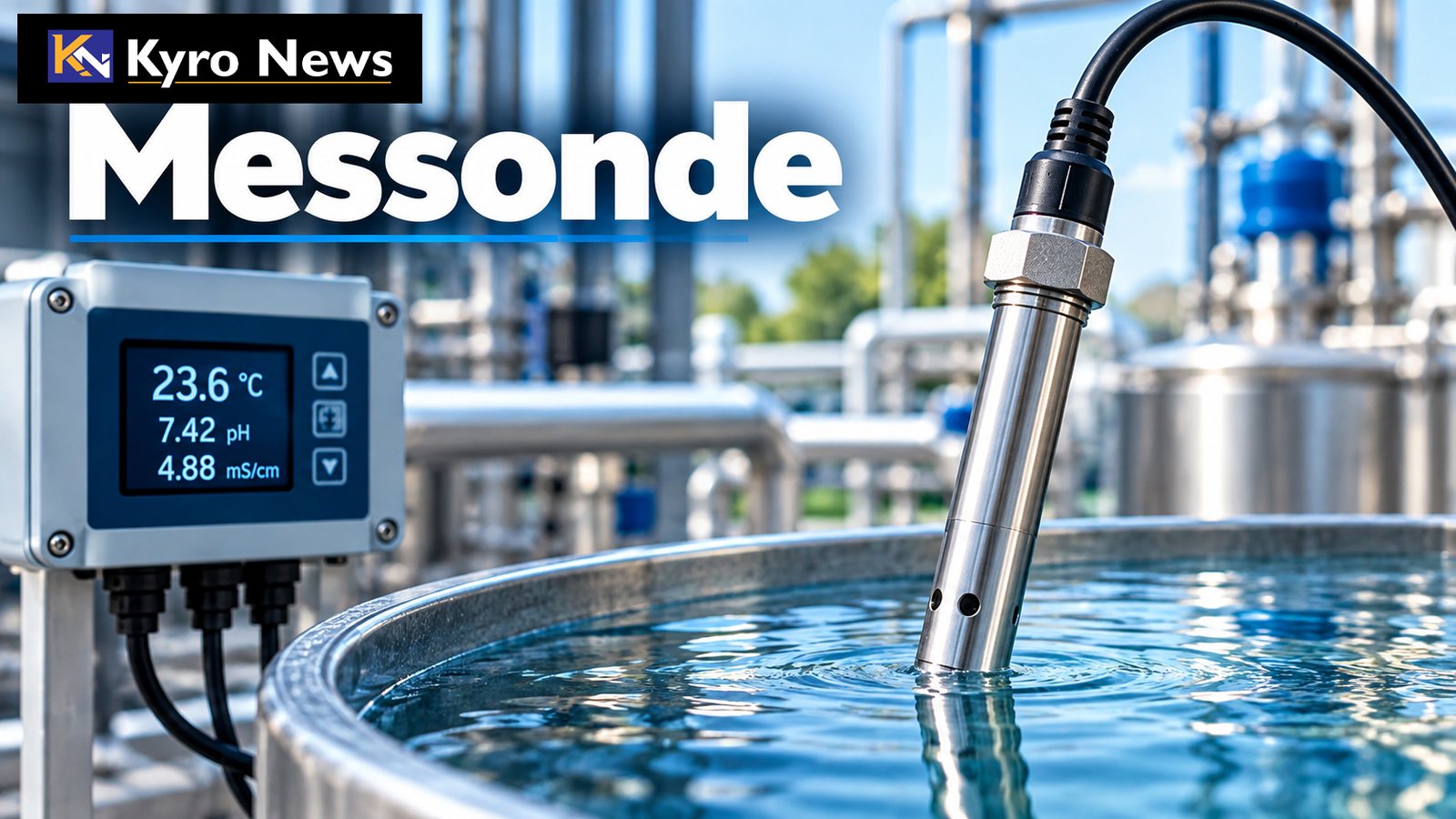
Messonde is best understood as a simplified, single-s spelling of “Messsonde,” a genuine German technical term for a measuring probe, a sensor device used to take physical measurements like temperature, humidity, or pressure and feed that data into a monitoring or control system. The correctly spelled term shows up in real product documentation from established measurement technology companies, even though the “Messonde” spelling itself has also picked up a cluster of vague, inconsistent English-language explainer content along the way. This article covers what a genuine Messsonde actually is, why the simplified spelling has generated confusing coverage, and how to separate the real technical term from the noise surrounding it.
Because there’s verifiable, real-world product documentation behind this term, unlike many unfamiliar search words, this guide grounds its explanation in that documented technical usage rather than treating every online claim as equally uncertain.


What a Messsonde Actually Is
In German, “Messsonde” is a compound word built from “messen,” meaning to measure, and “Sonde,” meaning probe, together describing a measuring probe: a sensor instrument designed to detect and record a specific physical property, such as temperature, humidity, pH, pressure, or gas concentration, and transmit that reading to a display, data logger, or control system. This is a genuinely established category of industrial and scientific equipment, referenced directly in real product documentation from companies operating in environmental monitoring, meteorology, and industrial process control.
Established measurement technology manufacturers, including companies specializing in humidity and temperature instrumentation, use the term “Messsonde” directly in their own German-language product names and technical documentation, describing specific, purchasable devices with defined specifications, accuracy ratings, and application areas. This is meaningfully different from a vague, undefined buzzword, a Messsonde is a concrete category of physical measurement hardware with real manufacturers, real technical specifications, and real industrial applications.
Why “Messonde” and “Messsonde” Are Easy to Confuse
The single-s spelling “Messonde” that generates most of the English-language explainer content appears to be a simplified or slightly incorrect rendering of the properly spelled German compound “Messsonde.” German compound words formed by joining a word ending in a consonant with another word starting with the same consonant, as happens here with “messen” and “Sonde” combining to produce a triple-s sequence in certain grammatical forms, are sometimes simplified or misspelled by non-native speakers or automated content systems that aren’t attentive to correct German orthography. This kind of minor spelling drift is common enough with technical loanwords and compound terms crossing between languages, and it’s a much more mundane explanation for the “Messonde” spelling than assuming the word describes something entirely different from its correctly spelled counterpart.
Why the English-Language Coverage Is So Inconsistent
Despite the genuine technical term underlying it, English-language content specifically covering “Messonde” is notably inconsistent, with some articles describing it in vague, generic terms as “measuring probes and sensors” without further technical specificity, and at least one article explicitly promising to cover its “two meanings,” without those meanings actually referencing any consistent, checkable technical detail. This pattern, generic restating of a real underlying concept without the specificity a genuine technical source would provide, is common when content gets produced around a foreign-language technical term by writers or systems without direct access to or familiarity with the actual industry documentation the term comes from. The result is a cluster of English-language articles that gesture vaguely toward the real concept, measuring probes and sensors, without providing any of the specific manufacturer names, product models, or technical standards that genuine industry documentation on the subject actually includes.
Where Genuine Messsonde Technology Is Actually Used
Understanding the real-world context helps separate the genuine concept from the vague coverage surrounding its simplified spelling. Measuring probes of this kind are used extensively across environmental monitoring, tracking soil moisture, air humidity, and temperature in agricultural and meteorological applications, industrial process control, where precise, continuous measurement of variables like pressure or chemical concentration is essential to safe and efficient operations, and building and HVAC systems, where temperature and humidity probes help regulate climate control systems in commercial and residential buildings. Companies specializing in environmental and industrial measurement instrumentation design and manufacture this kind of equipment specifically for these applications, producing devices with defined accuracy specifications, communication protocols, and installation requirements documented in real, publicly available technical literature.
How Measuring Probes Actually Work
At a basic technical level, a measuring probe like this typically contains a sensing element specific to whatever physical property it’s designed to detect, a temperature-sensitive resistor for a thermal probe, a capacitive or resistive element for a humidity probe, or an electrochemical cell for certain gas-sensing applications, paired with circuitry that converts the raw sensor signal into a standardized output, often a voltage, current, or digital signal that a connected monitoring system can interpret and record. The specific design varies considerably depending on the property being measured and the environment the probe needs to withstand, industrial probes designed for harsh chemical or high-temperature environments require different construction than a probe designed for a climate-controlled indoor setting, which is part of why manufacturers produce such a wide range of specific probe models for different applications rather than one universal design.
The Difference Between a Probe, a Sensor, and a Transmitter
Anyone researching this equipment category more deeply will quickly run into related but distinct terminology worth untangling, since these terms are sometimes used loosely or interchangeably in less technical writing despite having genuinely distinct meanings in professional documentation. A sensor is the specific component that physically detects a change in the property being measured, temperature, humidity, and so on, converting that physical change into an electrical signal. A probe typically refers to the housing and mounting assembly that protects the sensor and allows it to be inserted into or positioned within the environment being measured, a Messsonde specifically. A transmitter is a separate component, sometimes built directly into the probe housing and sometimes external to it, responsible for converting the sensor’s raw signal into a standardized output format that a monitoring or control system can actually read and use. Understanding this distinction matters for anyone specifying equipment for a real technical project, since a vendor or product listing describing a “sensor” versus a “probe” versus a “transmitter” may be referring to a physically distinct component, even when informal usage sometimes blurs these terms together.
How Probes Like This Connect to Broader Environmental Monitoring
It’s worth situating Messsonde technology within the broader, genuinely significant field of environmental and meteorological monitoring, since that context helps explain why this kind of equipment matters beyond a single industrial application. Weather stations, agricultural monitoring networks, and climate research installations all rely on networks of measuring probes recording temperature, humidity, soil moisture, and other variables continuously over long periods, feeding into the larger data infrastructure that meteorologists, agricultural scientists, and climate researchers depend on for both immediate operational decisions and longer-term data analysis. A single Messsonde is a small, specific piece of hardware, but it belongs to a much larger, genuinely important category of measurement infrastructure that underpins a wide range of scientific and practical applications most people never think about directly.
Why Getting the Correct Spelling Matters for Research
For anyone researching this term for a genuinely technical purpose, using the correct German spelling, “Messsonde,” rather than the simplified “Messonde” makes a meaningful difference in the quality and reliability of search results. Searching under the correct spelling surfaces real manufacturer documentation, technical specification sheets, and industry resources, while the simplified spelling tends to surface the vaguer, less technically grounded English-language explainer content discussed throughout this article. This is a useful general habit when researching any foreign-language technical term that might have picked up a simplified or altered spelling in English-language content, checking the original-language spelling directly, rather than relying solely on whatever variant happens to be most common in search results, often provides access to more authoritative, technically grounded source material.
Conclusion
Messonde is most accurately understood as a simplified spelling of “Messsonde,” a genuine German technical term for a measuring probe used across environmental monitoring, industrial process control, and building climate systems, documented directly in real manufacturer product literature. The vague, inconsistent English-language coverage specifically using the “Messonde” spelling reflects under-researched content rather than any real ambiguity in the underlying technical concept.
Anyone researching this term for genuinely technical purposes is better served using the correct German spelling and consulting real manufacturer documentation directly, rather than relying on the more generic, less technically grounded content that circulates under the simplified spelling.
Common Applications Worth Knowing in More Detail
Digging a bit deeper into specific use cases helps make the abstract category more concrete. In agriculture, soil moisture probes help farmers and irrigation systems determine precisely when and how much to water, improving water efficiency and crop yield by replacing guesswork with continuous, real-time data. In HVAC and building management, temperature and humidity probes feed data into automated climate control systems, allowing a building to maintain consistent, comfortable conditions while minimizing energy waste from over-heating or over-cooling. In food and pharmaceutical manufacturing, precise temperature and humidity probes are often required not just for quality control but for regulatory compliance, since many products require documented proof that they were stored and processed within specific environmental parameters throughout production. Each of these applications relies on the same basic underlying technology, a sensing element paired with signal conversion circuitry, adapted to the specific accuracy, durability, and environmental requirements of its particular use case.
What to Do if You Need This Term for a Technical Project
If you’ve encountered “Messonde” in a technical context, a datasheet, an engineering document, or a product inquiry, and need to actually source or specify the right equipment, the most reliable next step is reaching out directly to established measurement instrumentation manufacturers using the correct “Messsonde” spelling, or describing the specific physical property you need to measure, temperature, humidity, pressure, or another variable, rather than searching the simplified spelling alone. Manufacturer technical support teams and application engineers are generally well equipped to help identify the specific probe model suited to a particular use case, environment, and required accuracy, a level of specific, practical guidance the vaguer English-language explainer content covered throughout this article simply doesn’t provide.
Frequently Asked Questions
What is Messonde?
It’s best understood as a simplified spelling of “Messsonde,” a genuine German technical term for a measuring probe, a sensor device used to detect and record physical properties like temperature, humidity, or pressure.
Is Messonde a real product or technology?
The underlying concept, a measuring probe, is genuinely real and used by established measurement technology manufacturers, though the specific “Messonde” spelling itself has generated vague, less technically grounded English-language content.
Why does English content about Messonde seem so vague?
Much of it appears to restate the general concept of “measuring probes and sensors” without referencing the specific manufacturers, product models, or technical standards found in genuine industry documentation.
What industries actually use measuring probes like this?
Environmental monitoring, industrial process control, meteorology, and building climate control systems all commonly use this kind of measurement instrumentation.
Should I search “Messonde” or “Messsonde” for technical research?
Use the correctly spelled “Messsonde” for more reliable results, since it surfaces genuine manufacturer documentation and technical specifications rather than vaguer English-language explainer content.
How does a measuring probe actually work?
It typically contains a sensing element specific to the property being measured, paired with circuitry that converts the raw signal into a standardized output a monitoring system can record and interpret.
Why does one article claim Messonde has “two meanings”?
This likely reflects the same pattern of inconsistent, under-researched English-language content rather than any genuine, established dual definition documented in real technical sources.